
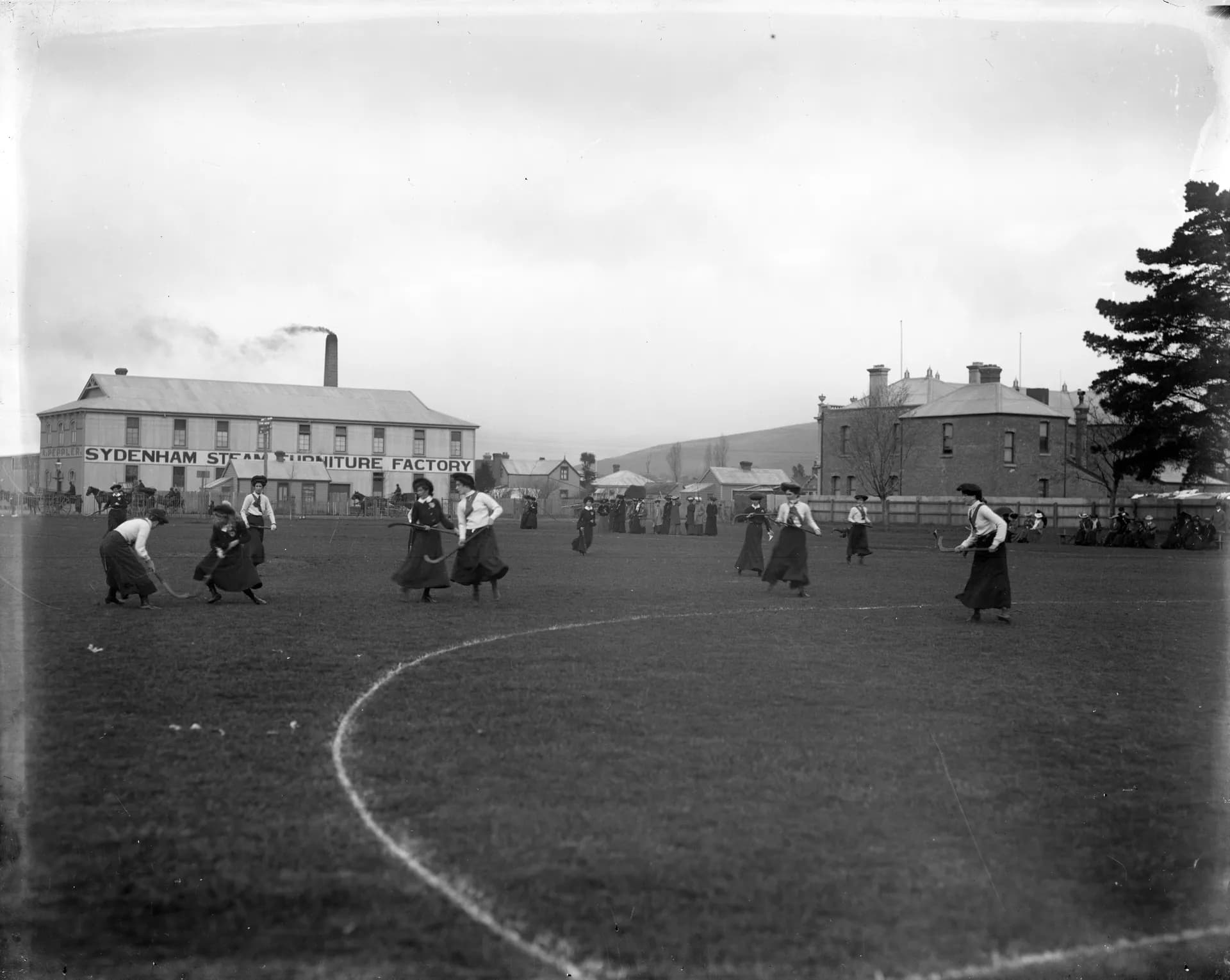
History of Field Hockey
From ancient Egyptian tombs to the modern Olympic stadium: the fascinating story of one of the world's oldest team sports.
A Timeline of the Beautiful Game
- Ancient Origins3000–500 BCE
Sticks and Balls Across the Ancient World
Stick-and-ball games are among the oldest recorded human pastimes. Depictions found in a tomb at Beni Hasan in Egypt, dating to around 2000 BCE, show players bent over curved sticks propelling a ball, an image strikingly similar to the game played today. Similar carvings have been found in ancient Greece, Rome, and Persia.
The ancient Greeks played a game called keritizein, and the Romans had paganica. Both involved striking an object with a curved stick. These games spread with the respective empires, forming a loose genealogy of stick sports that would eventually give rise to field hockey, ice hockey, and hurling.
- Medieval Europe500–1800 CE
Hourl, Shinty, and the Roots of Modern Hockey
Throughout medieval Europe, regional variants of stick games flourished under names such as hoquet (French for shepherd's crook), shinty in Scotland, hurling in Ireland, and bando in Wales. These games were informal, often chaotic, and played across open fields and village greens with little standardisation.
The English term 'hockey' appears in the Galway Statutes of 1527, when the game was prohibited alongside football and other pastimes thought to distract men from archery practice. This early appearance in the historical record speaks to how widespread the game had already become by the sixteenth century.
- Codification1800s
British Schools and the Birth of the Modern Game
The modern version of field hockey was formalised in England's public schools and military regiments during the early nineteenth century. Eton College is often credited with producing one of the first written rule sets around 1840. By 1875, clubs in south London had formed the Hockey Association, the world's first governing body for the sport.
The rules established in this era would be recognisable to players today: an offside rule, a defined pitch, and the distinctive 'striking circle' from which goals must be scored. The game spread rapidly through the British Empire, carried by soldiers, colonial administrators, and teachers to India, Pakistan, Australia, and Canada.
- Olympic History1908–present
From London to Paris: Field Hockey on the World Stage
Field hockey made its Olympic debut at the 1908 London Games, making it one of the earliest team sports in the Olympic programme. Great Britain won gold that year, and the sport quickly grew into a global competition. India and Pakistan dominated the mid-twentieth century, sharing twelve gold medals between 1928 and 1984 in one of sport's most impressive dynasties.
Women's field hockey was added to the Olympic programme at the 1980 Moscow Games. Since then, the Netherlands, Australia, and Germany have emerged as perennial powers in the women's game. Today, both the men's and women's tournaments at the Olympics attract elite teams from every continent and are among the most watched events in the Games.
The introduction of synthetic turf (astroturf) in the 1970s transformed the game at all levels. The faster, more predictable surface enabled higher ball speeds, more intricate passing patterns, and the short-corner drag-flick, one of the most spectacular skills in modern field hockey.
- Field Hockey in CanadaLate 1800s–today
Growing the Game Across the Country
Field hockey has been played in Canada since the late nineteenth century, introduced by British settlers and schoolteachers. The sport took root in British Columbia, Ontario, and Nova Scotia, where British cultural influence was strongest. Canada's women's national team has competed at the Olympics, and the men's programme has steadily developed through Field Hockey Canada's long-term athlete development framework.
British Columbia remains the heartland of Canadian field hockey, buoyed by a large South Asian community with deep roots in the sport and a mild climate that permits year-round outdoor training. The province produces the majority of Canada's national-team players and hosts dozens of club programmes, including right here in Abbotsford.
- The Game TodayModern era
Fast, Technical, and Thrilling
Modern field hockey is played on water-based or sand-based synthetic turf pitches by two teams of eleven players each. A match consists of four fifteen-minute quarters. Players use hooked composite sticks to pass, dribble, and shoot a hard plastic ball; only the flat face of the stick may contact the ball. Goals can only be scored from within the shooting circle (the 'D'), which creates intense, concentrated play around the goal.
The game is renowned for its speed, physicality, and skill. Elite players routinely hit passes at over 130 km/h. Drag-flick specialists can shoot corners at over 150 km/h. Goalkeepers wear significant protective equipment and must be as athletic as any field player.
At the community level, and at AFHC specifically, the game is about enjoyment, development, and belonging. Whether a child is attending their first session or competing for a provincial squad, field hockey offers a sport that rewards intelligence, teamwork, and effort in equal measure.
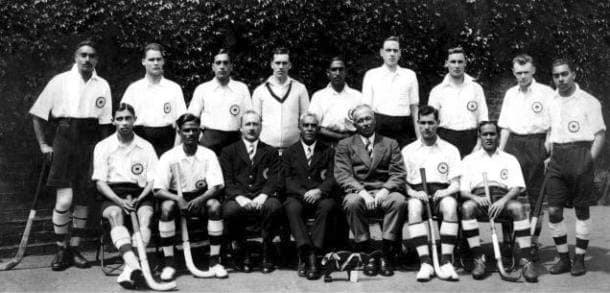
India's 1928 Olympic gold-medal team
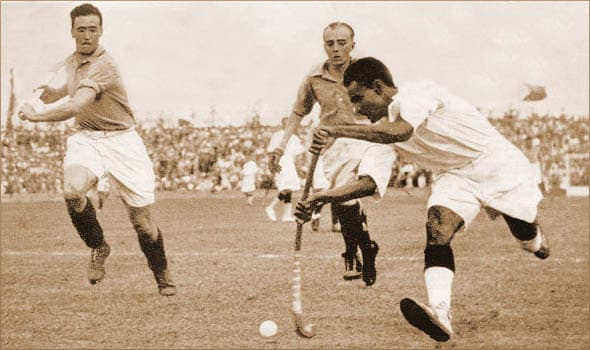
Dhyan Chand at the 1936 Berlin Olympics
Image Credits
Historical photographs are in the public domain, courtesy of Wikimedia Commons.
Field Hockey by the Numbers
Years of stick-and-ball games in human history
National member associations of the FIH
Year field hockey debuted at the Olympics
Top speed of an elite drag-flick shot
Ready to Play?
Join Abbotsford Field Hockey Club Today
Registration is open for all programs. Spots are limited, so secure your child's place before the season starts.